
The holiday season is magical for children. It is also loud, sugary, unpredictable, and exhausting. For more than 30 years, we have supported child care professionals through every holiday season, and we know how much this time of year asks of you and your team.
You are supporting teachers, reassuring families, and protecting the steady rhythm young children depend on. This article shares practical strategies for keeping classrooms calm and communication clear from the first days of November through New Year’s.
Why Are the Holidays Harder for Young Children?
Holidays are harder for young children because their routines are disrupted. Children rely on predictability to feel safe, and feeling safe allows them to learn, play, and regulate their emotions.
The season removes much of that predictability, and it does so for weeks, not days. Special events, visitors, travel, late nights, new foods, and changes at home all pile up. A toddler cannot tell you, “I feel overstimulated, and my nap schedule has been off for three days.” Instead, your teachers see clinginess, tears, biting, or boundary testing.
When your team understands this, they respond with patience instead of frustration. Challenging behavior during the holidays often signals that a child’s routine and sense of security are being stretched.
How Should Directors Plan the Season From November Through New Year’s?
Plan the holiday season in three phases: prepare in November, protect routines in December, and ease back into normal rhythms after New Year’s. Each phase asks something different of your team and your families.
November: prepare. Share the holiday calendar, confirm closures, and review your food, gift, and celebration policies. Early notice gives families time to prepare their children, and it gives your teachers time to plan. Thanksgiving week often brings the first shift in routines, so start previewing changes with children before the break.
December: protect. This is the busiest stretch, with parties, visitors, performances, and travel. Hold on to the anchors of the day, balance festive activities with calm ones, and keep your reminders going to families.
Late December through New Year’s: reconnect. Children often return from a break tired and unsettled, and some will need extra time to find their footing again. Welcome them back with familiar routines, simple visual schedules, and patience. A gentle first week back helps children feel secure again.

6 Holiday Classroom Management Strategies for Child Care Centers
1. Protect the anchors of the day
You cannot control everything about the season, but you can hold on to the pillars: arrival routines, meals, naps, outdoor time, and goodbyes. Keep these as consistent as possible, even when the schedule around them shifts. Children handle a special event, like a holiday party or a visit from a guest, much better when they know lunch and rest time will look the same.
2. Preview changes before they happen
Use visual schedules, picture cards, and simple language to walk children through what comes next. Try something like: “Tomorrow, a special visitor will sing with us. After that, we will have lunch like always.” Even your youngest learners benefit from hearing the plan.
3. Balance high-energy and low-energy moments
For every festive activity, build in a calming one. Follow a sing-along with a quiet reading corner. Follow a party with calm sensory play, like playdough or a water table, or with a rest time that has soft music and dim lights. Think of the day as a rhythm, not a performance.
4. Create a calm-down space and keep it available
Cozy corners with soft lighting, books, and sensory items give overwhelmed children a place to reset. Remind your teachers that using this space is a skill children practice, not a consequence.
5. Keep celebrations inclusive and developmentally appropriate
Not every family celebrates the same holidays, and not every child enjoys loud, crowded events. Focus on shared themes like kindness, gratitude, winter, light, and community. Offer choices so children can join in at their own comfort level.
6. Support your teachers, too
Educators carry a lot of emotional weight from November through New Year’s. Show them you care with small, genuine gestures: an extra planning break, a staff lunch, or a clear plan for covering absences. Staff scheduling tools in your child care management software make coverage planning faster, so you can spend your energy supporting your team instead of juggling spreadsheets. A regulated teacher is the best classroom management tool you have.

6 Tips for Communicating With Families to Support Children During the Holidays
Children do not experience the holidays only at your center. They carry the excitement, the late nights, and the changes at home into your classrooms every morning. When you and your families share information and prepare children together, you give them the consistent, predictable support they need to feel secure. A timely message strengthens that partnership and, in turn, the child.
1. Share the holiday calendar early so families can prepare children
Young children cope with change more easily when trusted adults prepare them for it. Send closures, early pickups, and special events well before families need to act, ideally in early November, so parents can talk through the plan at home using the same simple language your teachers use at school. Start with an initial announcement, follow up with a reminder a week out, and send one more a day or two before. Procare lets you send each of these from one place, so no family misses the message. Repetition helps busy adults, and it helps children hear the same preview from both of their worlds.
2. Put the essentials first to protect children’s routines
Lead every message with what is changing, when, and what families need to do. A parent who learns about an early pickup in time can plan around it, protecting the nap, snack, and calm goodbye their child depends on. Save the festive details for after. A parent skimming between meetings or during a lunch break should still catch the key point.
3. Explain seasonal behavior changes as a normal part of development
Tell families that shifts in sleep, appetite, and behavior are common this time of year. Toddlers and preschoolers are still building self-regulation, and big feelings during a busy season show that they are working on it, not that something is wrong. A short note such as “You may notice some big feelings at home, and we see them here too” reassures parents that their child is not alone and gives them a way to respond with patience.
4. Invite partnership so teachers can read behavior in context
Ask families to share what is happening at home, such as travel plans, visiting relatives, or new routines. Two-way messaging makes this easy, because parents can reply in seconds instead of waiting for pickup. A child who stayed up late with cousins may bite or cry for reasons that have nothing to do with the classroom. When your teachers know the context, they can see that behavior as communication and respond with the right support instead of a correction.

5. Set expectations around gifts, treats, and celebrations so every child belongs
Children notice quickly when they are left out. Share your policies on food allergies, gift exchanges, and classroom parties clearly and kindly. Guidance ahead of time prevents awkward moments, keeps every child safe, and protects each child’s sense of belonging.
6. Celebrate small wins to show families their child’s growth
Send a quick photo, a short note, or a “we noticed this today” message, and make it specific. “Maya chose the calm-down corner on her own today” tells a parent far more than “Maya had a good day.” With photo sharing and daily reports built into your software, your teachers can capture these moments in seconds. They show families real progress in self-regulation and social skills, and they build the trust that makes every other conversation easier.
How Can Child Care Management Software Help You Put These Strategies Into Practice?
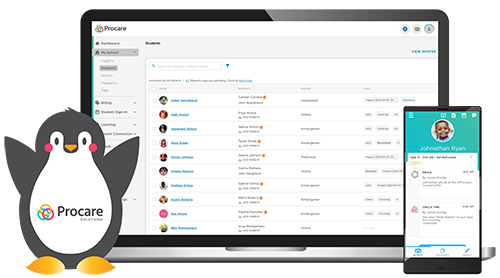
Child care management software gives you one place to communicate with families, track the day, and coordinate your team, which makes every strategy in this guide easier to carry out. During a season when everyone is stretched thin, that consistency matters.
We designed our software around the real challenges directors face, and the holidays put many of them in the spotlight. In fact, our 2026 Child Care Business Trends Report found that 65% of teachers identify communication tools as the most valuable software feature. Here is how Procare supports each part of this guide:

- Share the calendar and send repeated reminders. Send announcements and reminders to every family, or to a single classroom, from one place.
- Explain seasonal behavior changes. Send a short, reassuring note to all families at once, so everyone hears the same message at the same time.
- Invite partnership. Use two-way messaging so families can tell your teachers what is happening at home.
- Set expectations for food, gifts, and parties. Share policy documents and collect parent signatures digitally, so every family has the information and you have a record.
- Celebrate small wins. Share photos, videos, daily reports, and milestones with families throughout the day.
- Protect the anchors of the day. Record meals, naps, and activities in daily reports, so your teachers can spot when a routine slips and respond early.
- Support your teachers. Use staff scheduling and attendance tracking to plan coverage for absences before they become a scramble.
- Ease back in after the break. Keep attendance, updates, and messages flowing during the first week back, so families know how their child is settling in.
Because everything lives in one system, your front desk answers fewer repeat questions, your teachers spend less time on paperwork, and your families feel connected all season. That means more time for the children in front of you.
Holiday Checklist for Child Care Directors
☐ Share the holiday calendar and closures with families in early November, or at least a few weeks ahead
☐ Review daily schedules and identify which routines to protect
☐ Plan a mix of high-energy and calm activities for each day
☐ Confirm that calm-down spaces are stocked and ready
☐ Send a family note that explains common seasonal behavior changes and how families can prepare children at home
☐ Communicate policies on food, gifts, and celebrations
☐ Set up your reminders, photo sharing, and messaging in your child care management software before the season gets busy
☐ Check in with each teacher and offer support where needed
☐ Plan a gentle return to routine for the first week after New Year’s
Frequently Asked Questions
Children often act out during the holidays because their routines, sleep, diet, and environments change all at once. Young children cannot explain overstimulation, so it shows up as tears, clinginess, or testing limits.
Keep core routines like meals, naps, and outdoor time consistent, preview changes with visual schedules, and alternate festive activities with quiet ones. A designated calm-down space also helps children reset.
Announce closures and schedule changes in early November, or at least several weeks in advance, then send reminders about a week before and again a day or two before. Early notice gives families time to prepare children for changes, and repetition helps busy parents stay on track.
Focus on shared themes like kindness, gratitude, winter, and community instead of a single tradition. Offer choices so children can participate at their comfort level, and share food and gift policies in advance.
Offer practical support such as extra planning time, a staff meal, and clear coverage plans for absences. Teachers who feel supported keep classrooms calmer.
Return to familiar routines right away, use visual schedules to preview the day, and give children extra time and patience during the first week back. Predictable rhythms help children feel secure again.
Child care management software gives directors one place to send closure announcements, reminders, photos, and daily updates to families, and to receive replies. This keeps messages consistent, saves front desk time, and helps families prepare children for holiday changes.
The Takeaway
The holiday season does not have to mean chaos. When you protect routines, plan for big feelings, and communicate early and often from November through New Year’s, your classrooms stay steady and your families feel supported.
Children may not remember the exact schedule or every party. They will remember whether they felt safe, seen, and cared for. That is the real gift your program gives, season after season, and we are proud to help you give it.
Request a Demo
Talk with a friendly Procare expert to get a tailored child care solution for the unique needs of your business.